

Do You Need That Tool?

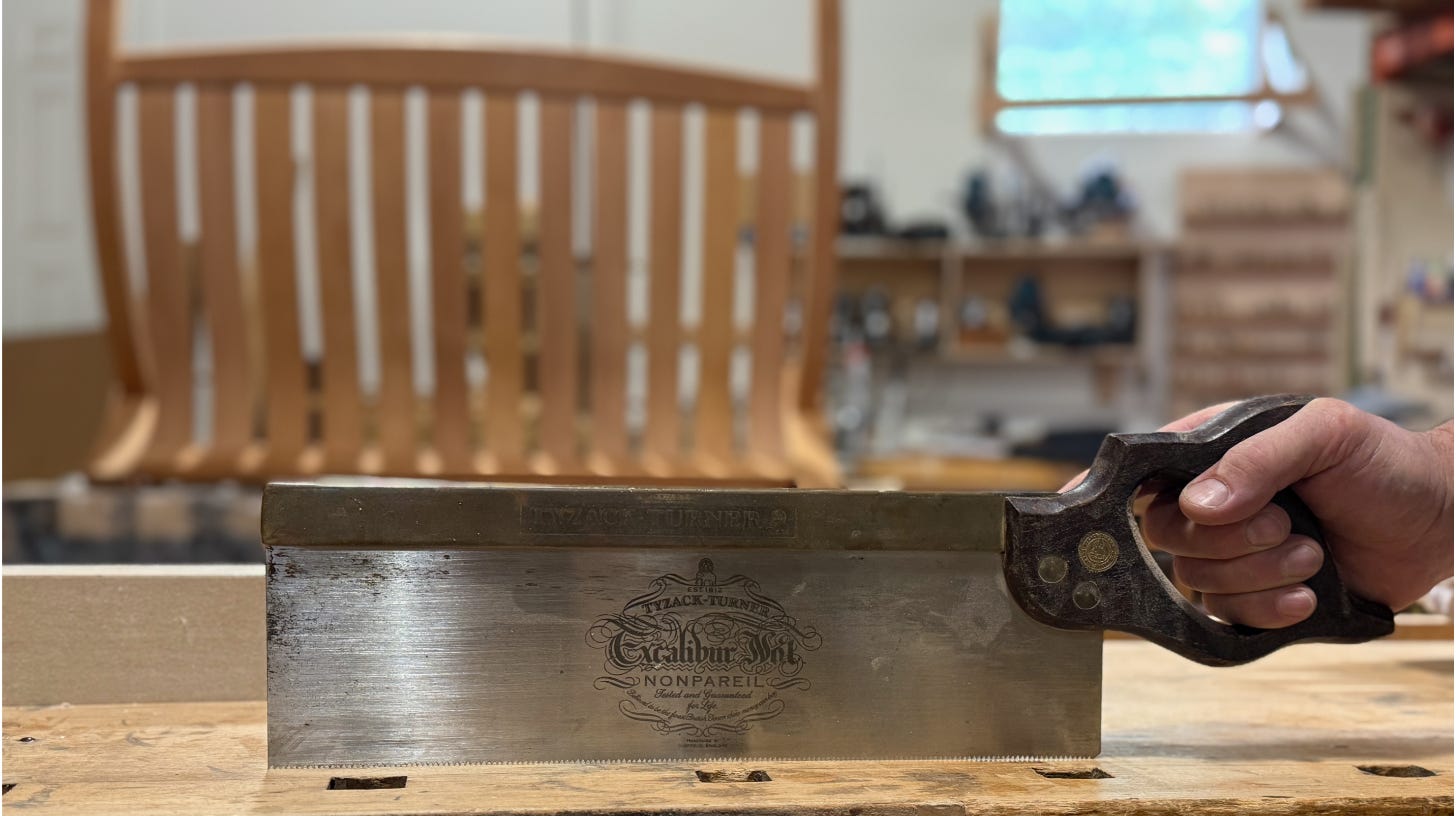
Whenever my wife and I go out to eat with friends, I try to look at the menu online well ahead of time. I have a real problem deciding what to eat while sitting at the table.
I don’t know where that comes from, but it’s hardest when duck and lamb are both on the menu. If I order duck, that means I don’t get to have lamb. I can’t order both as there is no room in my stomach for both. In fact, I often want everything on the menu. Not because I want to eat that much, but because it all looks so delicious that it torments me to have to decide between them.
I feel the same way about tools.
There are so many gorgeous hand tools out there and so many machines that can do amazing things that I want them all. I know I don’t have enough room in my shop or in my budget for all of them. But that’s not the biggest problem with having too many tools or machines.
I have often told the story about starting out making chairs in 1982. No power tools and very few hand tools. I made chairs that way for three years, more than three hundred of them, before I finally bought a drill press. In hindsight, I think that made it easier rather than harder to learn how to make chairs.
There were fewer tools to master, and it forced me to keep my projects simple. Any fixturing was basic, which allowed me to learn how fixtures can improve both speed and precision. These limitations also forced me to use the full spectrum of each tool in my kit. I had to push every tool beyond the limits conventional wisdom assigned to it.
I bought sandpaper as seldom as I could because it didn’t last long before it became trash. Watching how slowly it prepared a surface, I could barely justify a trip to the store, much less the money to buy it. Remember, this was 1982, way before Al Gore invented the internet,* so buying stuff generally meant driving somewhere.
That observation led me to develop my spokeshave skills intensely. I could clearly see the value in a skill that kept getting better the more I used it. Sandpaper always got worse the more I used it.
What did not get better was the spokeshave itself, so I started improving the Kuntz version I owned. That taught me a great deal about how the tool worked—and how it didn’t. Eventually I started developing my own spokeshave designs.
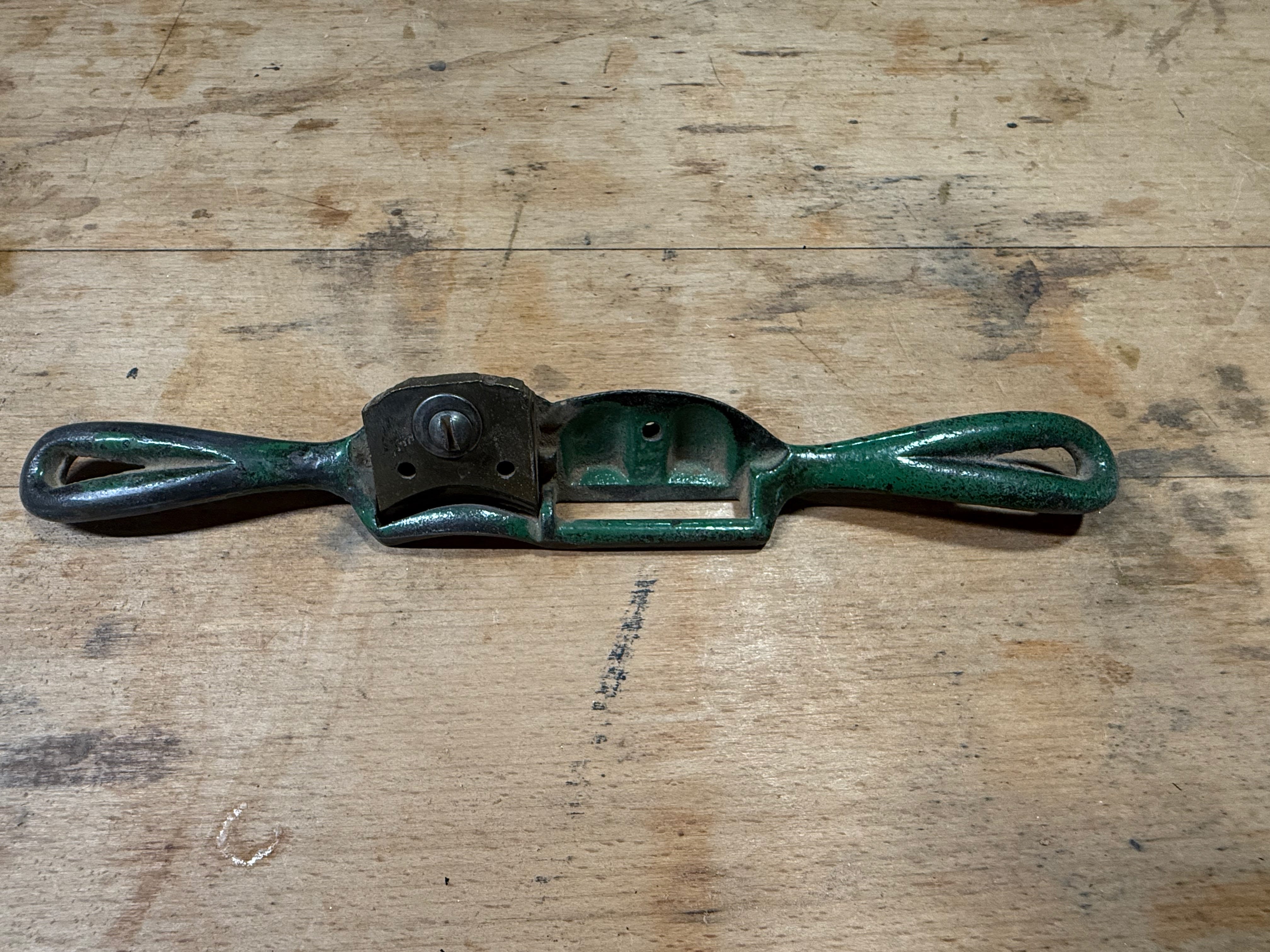
While I actually made this shave a lot uglier with my efforts to make it work better, what I did to it actually made it work remarkably well….so I set out to fix the ugly part…from scratch.
That led to some very good things, among them a spokeshave design that eventually made its way to Lie-Nielsen, and from there into workshops I’ll never visit. But that is a longer story.
One tool lesson I will never forget involved a backsaw.
At the time, I didn’t have an accurate way to cut chair rungs to length other than using a backsaw on a modified bench hook with stop marks. The saw came from my father, who had little use for it in his own shop. It was a Craftsman saw from Sears, a perfectly respectable saw for a homeowner’s toolbox, but not what most people would choose for fine furniture making.
I thought I could make it work anyway.
An elderly friend of mine happened to be a professional saw sharpener for more than fifty years. He sharpened everything from chainsaws to hand saws. Even then he was a rare connection to have. Today he would be almost impossible to find.
He was not only a master sawsmith, he was also a patient teacher. I treasured every minute I spent learning from him, though only in hindsight do I fully understand what a gift that was.
I sharpened my saw nearly every week. It wasn’t getting dull that fast; I just kept missing the standard he set for me. My thinking was that I would learn to sharpen on that saw and then celebrate my graduation from this backyard sawsmithing school by buying a proper furniture-maker’s saw.
Eventually I decided I was good enough and ordered a Non-Pariel backsaw from Garrett Wade. It was considerably more expensive than the alternatives, but I didn’t know anyone who could help me evaluate the options. My teacher was a Disston man, and I couldn’t find a new Disston backsaw.
When the saw arrived, I admired the lettering on the blade and the sheen of the brass back. Then I looked at the teeth.
I was shocked.
Every tooth was flat on the tip.
The flats were large enough that I not only had to file the teeth correctly, but also reset them. I wanted to throw up. I felt embarrassed that I had let branding and catalog copy convince me that I was buying something special.
My punishment for this foolish decision was to re-tooth the saw and enjoy a generous helping of crow.
The saw worked fine after surgery. I cut plenty of rungs and tenons with it over the years. But it was never a friend. It was more like a neighbor I had to tolerate.
It’s still on my wall today as a trophy of foolishness.
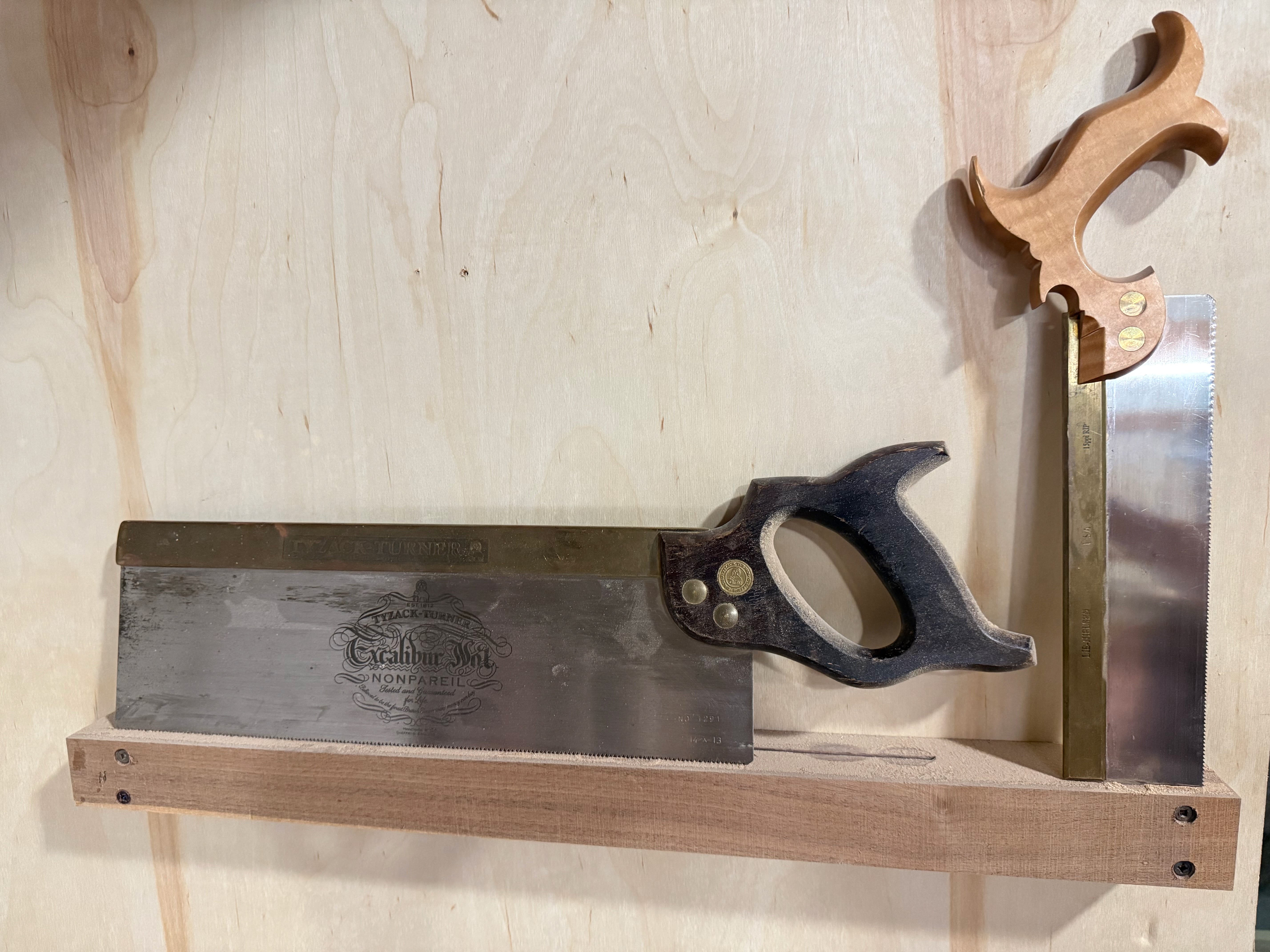
My gratitude goes to all those who have changed today’s experience with saws.
The backsaw I use now is a Lie-Nielsen. What a joy it is to use. It is also a humbling reminder that I never truly mastered saw sharpening. There is a reason sawsmiths occupied such an honored position in our craft. The sharpening lessons I practiced didn’t make me one, but they certainly gave me a perspective that continues to benefit me.
While there were plenty of tool choices to consider throughout my career, the recent explosion of new ideas in hand tools and the quality of many modern machines make me grateful that I already own most of what I need.
These days, purchases are less about gaining capability and more about improving existing processes or creating new ones.
My most recent investment, however, was a grinder I purchased for the purpose of gaining capability.
I bought a used Baldor 3500 RPM grinder in the 1980s for $100, and it served me well for decades. Eventually, the starter failed. I had also become interested in bringing CBN wheels into my sharpening process.
The aluminum oxide wheel that I had was originally eight inches in diameter. By this point, it measured just under four.
It was time to decide what I was going to eat.
It was also time to revisit my usual list of questions:
What is this machine for?
What all can it do?
How much does manufacturing quality matter versus what I can accomplish with fixturing and process?
Can my old machine do everything I want if I tune it up?
Can a new one save me meaningful time?
Is there a company of integrity making one on this continent?
Do I need a new one at all?
Or is there an older machine I can make work?
What additional tooling or fixtures will I need to support the changes I want to make?
The point isn’t that I bought a better grinder. The point is that forty years of learning to stretch the limits of the tools I already owned taught me how to evaluate whether a new machine was actually solving a problem. Had I bought this grinder in my twenties, I would have been buying hope. Buying it now was a decision informed by experience.
The answers eventually led me to a Toycen grinder from Ottawa, Canada.
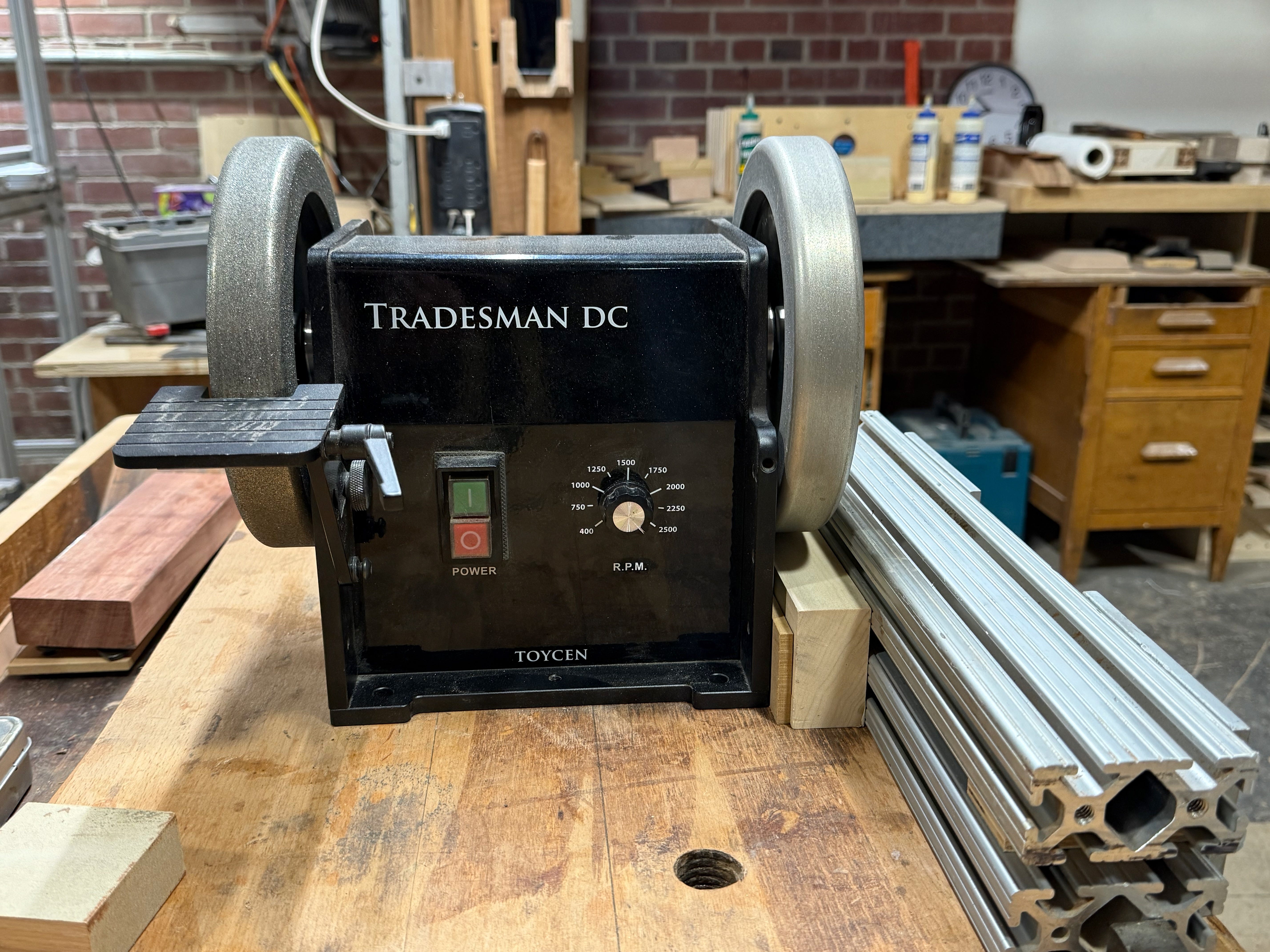
The Toycen grinder won me over with its promise of a spindle with less than .0002” of runout. No other company I found offered ANY precision promise backed up with numbers like this. I like numbers.
I’ve been using it for several months now and it has absolutely lived up to expectations. I have about $1,300 invested in the grinder and wheels. I will pay that price only once. You pay for poor choices every time you use them. More importantly, I really like the company.
I got to know them better than expected because there was an electronic issue with the speed control. When I called, I spoke directly with the person who builds the machines, not a receptionist or customer service department. The way they handled the issue created a positive relationship rather than simply fixing a problem.
I’m now building the guiding system that will support the way I want to grind.
That story isn’t over yet, but it is going well.
The questioning process I developed forty years ago led me to a sensible decision, even though I spent more than I originally expected. The problem was that I established my expectations before I learned what was actually available.
I spent a lot of time looking at used machinery, hoping to find an older machine that would work. I’ve had good luck with that strategy over the years. But in this case, I’m happy with the decision I made.
The reason I wanted to share these stories and thoughts with you is that I have seen so many tragically stuffed shops over the years.
Almost every shop I visit has far more tools than it needs.
So much money is tied up in things that rarely get used that there is no budget left for truly good equipment or truly good hand tools.
After more than forty years in the shop, all my experience keeps bringing me back to a few simple beliefs:
• The more skills you have, the fewer tools you need.
• The fewer tools you have, the more space you have to work.
• The fewer tools you have, the more focused your skill development can be.
• The fewer tools you have, the better quality you can invest in.
• The fewer tools you have, the easier it is to clean your shop, find things, and simply breathe.
When I was young, being limited to very few tools felt like a disadvantage.
Looking back, I think it was one of the greatest gifts I could have received.
It forced me to learn what each tool could really do before I started looking for another one.
That lesson feels even more valuable today, when the options are better than they have ever been, and more distracting for it.
If you are looking for a place to see many of those options in one room, and to meet some of the people who make and use them, I hope you will join me at Handworks this September at the Amana Colonies in Iowa. I’ll have a small booth there. I hope to see you: Handworks
*Apologies for that bit of internet humor. Credit for the internet belongs to Vint Cerf, Bob Kahn, and many others who actually developed it.
From the Bench - Brian Boggs
Your insights carry admirable precision, and the trouble you take to make your essays interesting and concise is much appreciated.
I see so many used woodworking machines on marketplace going for little or no money!
I need to remind myself the real cost is in hauling it, storing it and the time spent making it work again.. Great way to get started in the trade but know your limits.