

Worthless Paper
A patent I couldn't afford, a contract we lost, and it never mattered anyway.

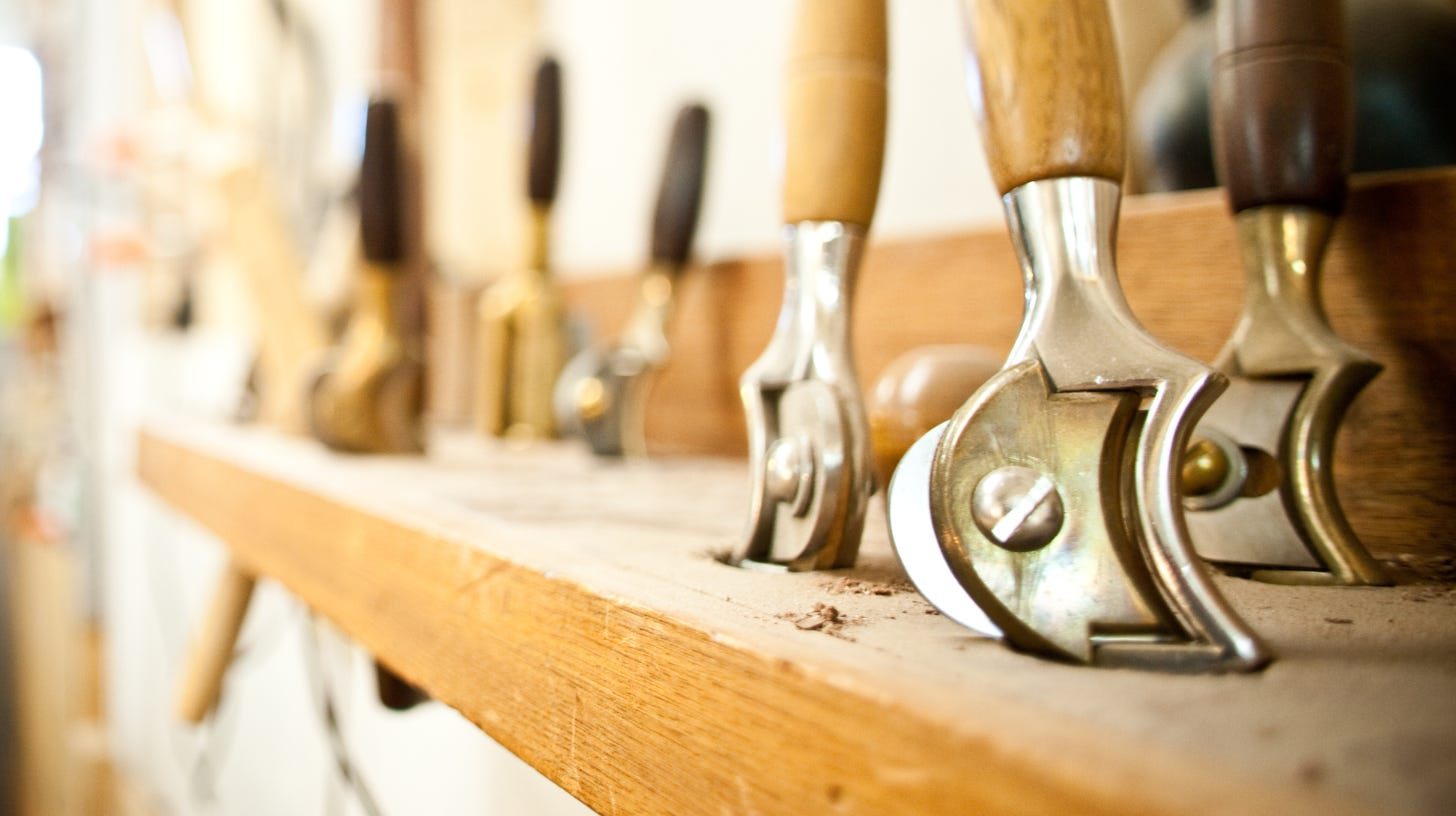
By the time I’d finally made a spokeshave that worked the way I wanted, really worked, the kind you forget you’re holding, I couldn’t put it down. I used it for everything, and when I started teaching classes, I brought it along without thinking that through. That turned out to be a problem. I was trying to teach people the skills of spoke shaving and drawknife work, and I was doing it on a tool nobody in the room could buy. Every student who touched mine wanted one. That’s a problem and an opportunity, as most things are.
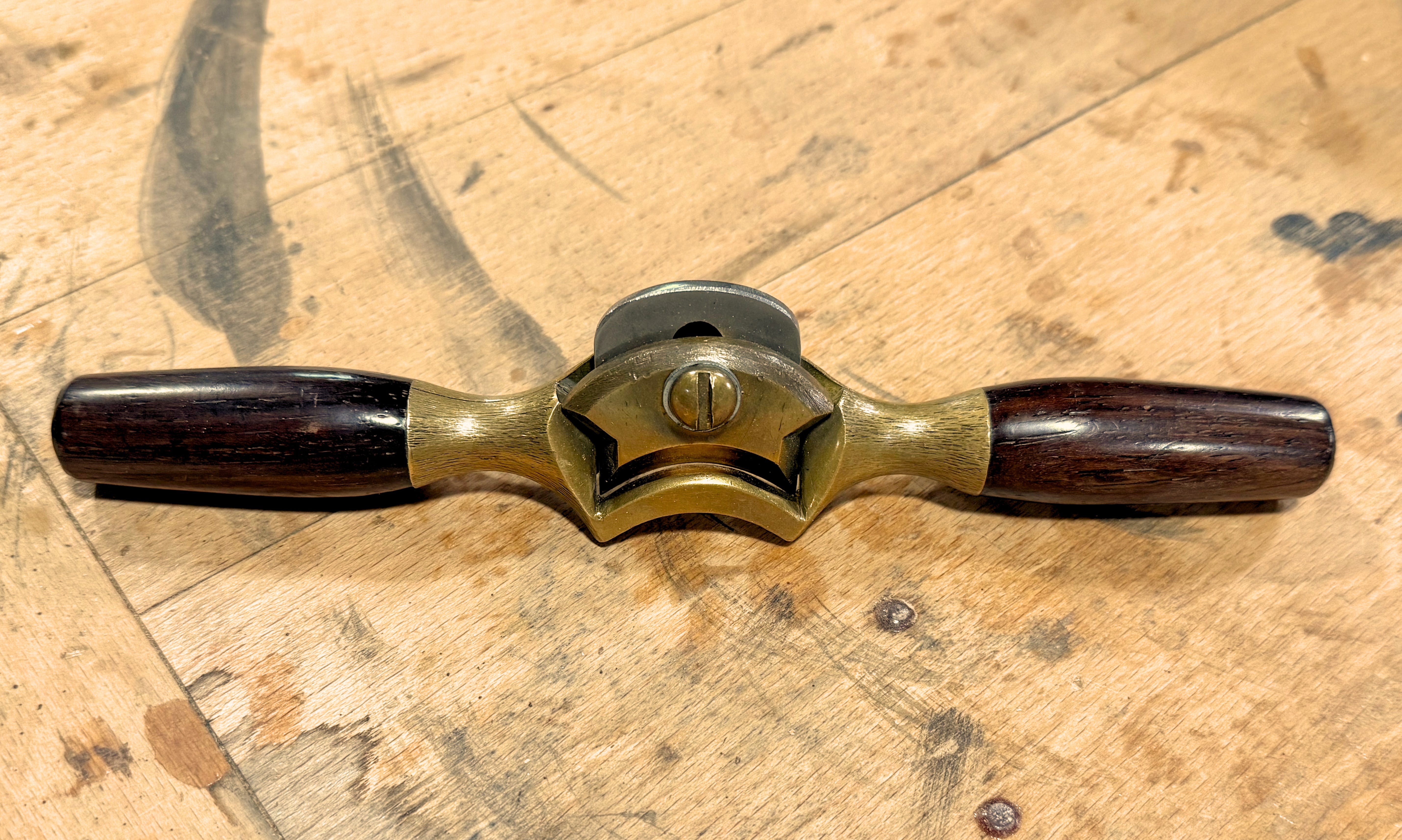
The original, hand-shaped, unbranded, the one every student in the room wanted and couldn't buy.
So I looked into making batches. I had bodies cast through the lost wax process, a master, an epoxy mold, a wax pattern, a plaster mold, the part, and learned how much shrinkage to allow for, what blade to pair with the demands of the tool, all of it. I ran that little tool business inside my chairmaking business for a couple of years. A couple hundred shaves, give or take. And at some point I felt the journey had gone as far as it needed to go. Making the two-hundred-and-first spokeshave wasn’t going to teach me anything the first two hundred hadn’t already. I took this venture on to support my chair work. Time to move it to the next level.
What I wanted next was a company I could trust to make them and pay me a fair royalty for the design rights. I was pretty anxious about this move. I had a small operation with no legal team, no money for a patent, nothing standing between me and being taken advantage of if I picked wrong. My friend Jerry Glazer, who has since passed, had spent years in tool making himself, and he was also a good friend of Leonard Lee. Leonard was the founder of Lee Valley Tools and its in-house manufacturing arm, Veritas. Jerry couldn’t say enough about how trustworthy Leonard was. That perspective was validated over time by every interaction with Leonard and the companies he founded. I sent Lee Valley a sample, they talked it over, and after about a year of preparation, they put it into production.
That went fine for a while. Then I sent them a flat version of the shave, and Lee Valley decided they wanted adjusters on the line. I didn’t object to this idea in principle, except I could never work out how to add an adjuster without it getting in the way of how the tool is actually held. There are grips I use on that shave that an adjuster of that kind simply blocks. We didn’t agree, and they let me know they’d rather do their own thing going forward. That hurt deeply, but I was intent on avoiding the mistake of having momentary feelings break a good relationship with a solid company and the wonderful folks I got to know while working with them. That was a business decision, and in hindsight, it looks like one that worked out well for all involved.
Somehow, I still don’t know how he heard so fast, Tom Lie-Nielsen called not long after. Asked if I’d be interested in designing a line of tools for his company, Lie-Nielsen Toolworks. I said yes before I’d even finished being surprised. Yeah, I know, I should have told him I’d think about it and get back to him. But different words spilled out of my mouth instead. Of all the tool companies in the world, that one calling me was about as good as it gets, and I felt the weight of that.
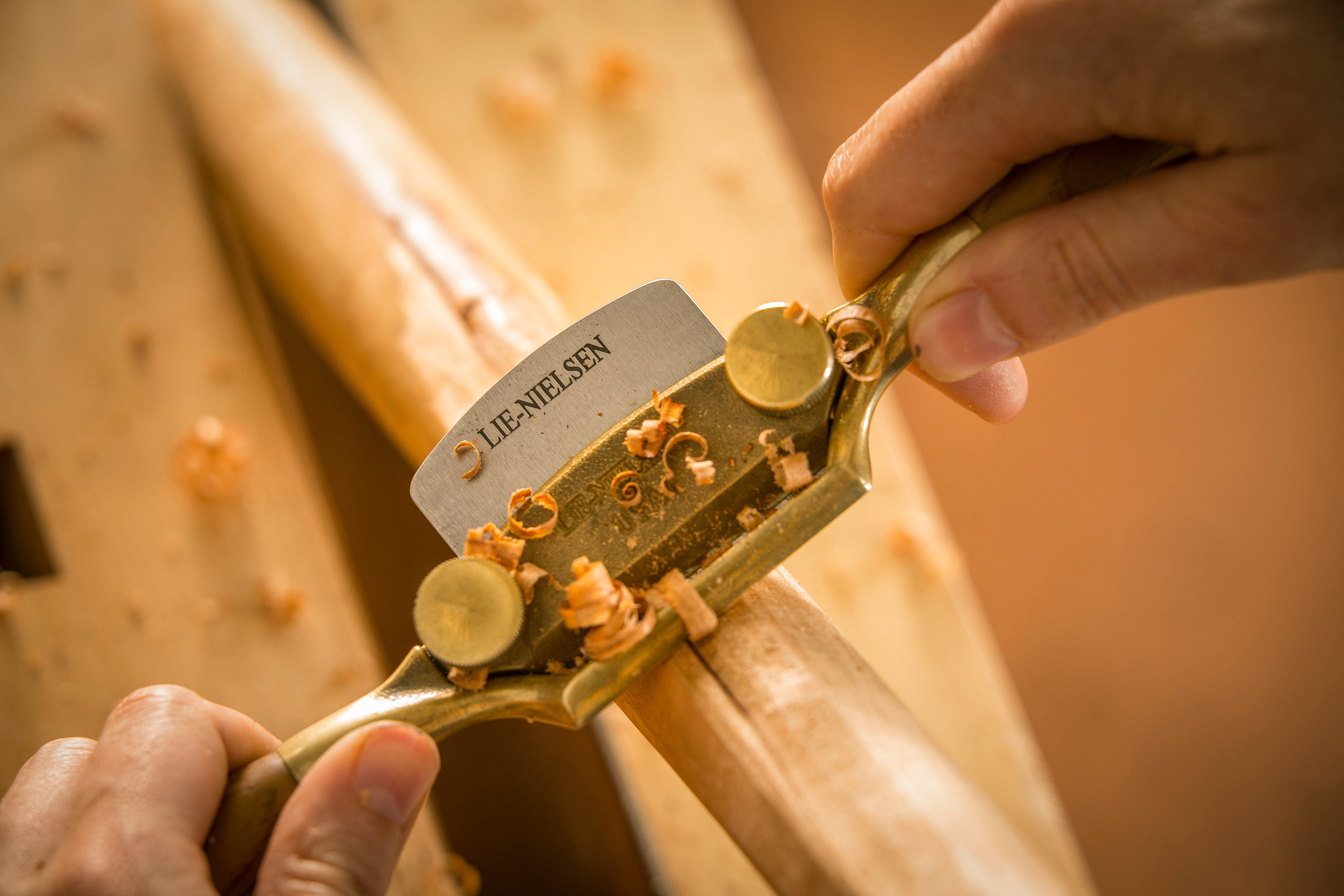
I went back to the bench and rethought the tools from the ground up, not because the originals didn’t work, but because I wanted them to carry that particular balance of look and function that makes a tool disappear into the hand. I was also now designing for Lie-Nielsen Tools. I wanted their brand, their look, infused into the tool from the first thought of this collaboration. I’d already gone through so many iterations of my own shaves that I skipped straight to carving a wooden pattern. I don’t mean to describe this as an easy challenge, but at this point it was well practiced. The flat one went first, since we both knew it would be the best seller. I sent Tom the pattern. He liked it, we signed a royalty agreement, and that was that.
We ended up with three different models in the spokeshave line. I also designed a travisher that they made a couple of before clarifying that the manufacturing posed too many challenges to sustain. These three shaves have sold well since the day they went into production. That actually surprised me. I expected a period of strong growth in sales, then a tapering off to a trickle, not the consistently strong sales for decades we have seen instead.
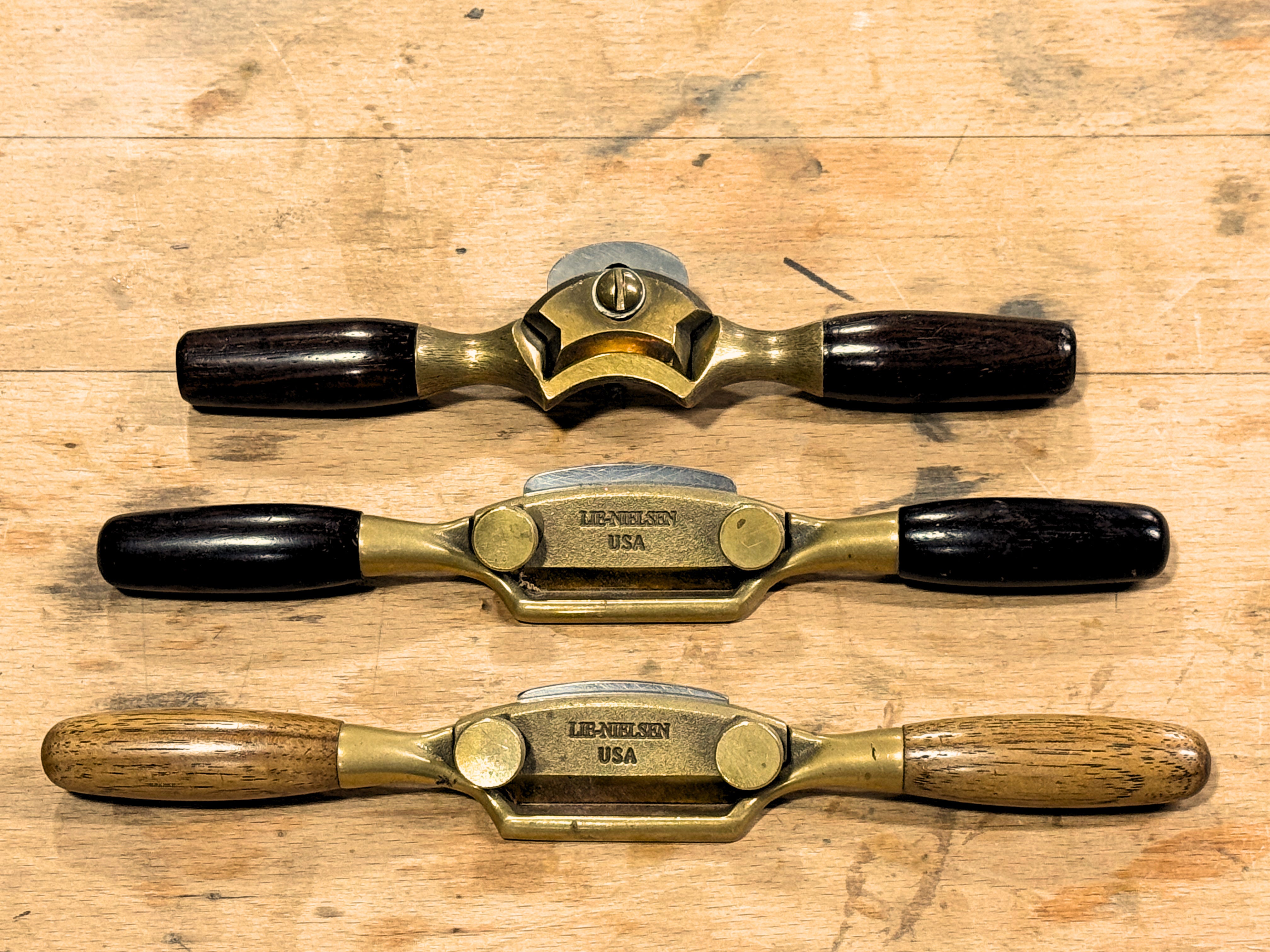
Two of the three from Lie-Nielsen, and Brian’s original concave shave that inspired the whole project
Twenty-some years of that relationship ran on a handshake and a piece of paper neither of us thought much about. Royalty checks just arrived, quarter after quarter. Then in 2020, we were refinancing the house, and the bank wanted a written licensing agreement on file. I went looking for our copy of the original contract and couldn’t find it anywhere. We’d moved shops so many times over the years that it had gotten lost somewhere in the shuffle. So, feeling pretty foolish, I called Tom and asked if he could send me a copy.
He said sure, no problem, he’d have his bookkeeper dig it up. Weeks went by. Nothing. I called again. Turned out Lie-Nielsen couldn’t find their copy either. I remember thinking, oh, shit. But Tom just said, don’t worry about it, write something up and I’ll sign it. So I wrote a stripped-down version of the old agreement from memory, sent it over, and he signed it without a second thought. The whole exchange took about as much drama as ordering a part. That contract had never been the thing holding the relationship together. It was just paper acknowledging what was already true. We worked from a place of mutual respect.
A few years into the partnership, a major retailer started carrying a house brand that looked an awful lot like Lie-Nielsen's line, built cheap overseas. Lie-Nielsen’s planes are largely refined versions of old Stanley Bedrock designs, which are mostly public domain at this point, so there wasn’t much ground to protect there. My spokeshave was different enough, original enough, that Lie-Nielsen was eventually able to get it pulled. But by then a fair number of knockoffs had already sold, and I remember being genuinely worried it would gut our sales and my royalty along with it.
It didn’t move the needle at all. Not a blip. And that taught me something I’d heard about but never actually watched happen up close: there’s no protection like brand loyalty. Lie-Nielsen’s customers wouldn’t touch a knockoff on principle, and the people buying the knockoff were never going to pay full price for the real thing anyway. Two completely different buyers, no bridge between them. It gave me a clear-eyed sense of how much it matters, when you’re putting something out into the world that you can’t really protect on paper, to be standing with a company whose name people already hold in high regard. That kind of protection isn’t written into any contract. It’s built one satisfied customer at a time, over decades, and it turned out to be worth more than a patent I could never have afforded anyway.
That same restless pull, I’ve started calling it the Sirens, never once whispered anything about royalty checks or trademarks. It just wanted the next tool built right. Everything after that first working shave, Lee Valley, Tom's call, the handshake, the knockoffs, was what happens once the thing the Sirens called you to make has to go out and live in the world without you standing next to it.
I think about that shave held in a woodworker’s hand somewhere right now, and I think about a chair doing the same work in a different way. A chair has to earn a body’s trust the moment someone sits down in it, the curves have to be right, the support has to be where it’s needed, or the whole thing fails on contact. A tool has to earn a hand’s trust the same way, stroke after stroke, or it gets set down and forgotten. Neither one gets there through cleverness alone. Both start with paying very close attention to a person you may never meet, and building something that holds up to what they actually need, whether or not there’s ever a piece of paper to prove you did.
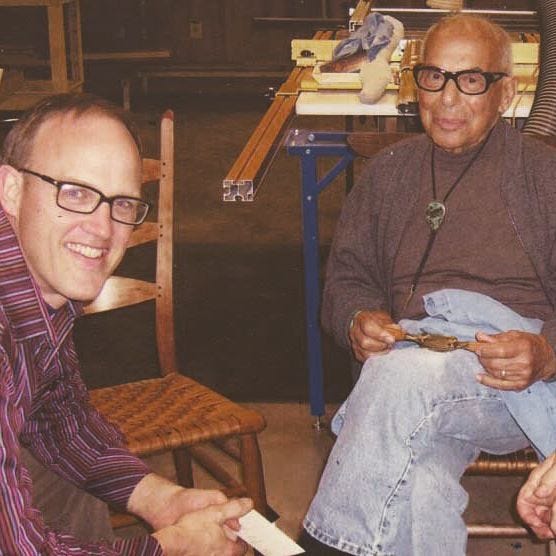
Sam Maloof, holding one of the Lie-Nielsen shaves — Greenville, SC, 2004, at Bobby Hartness' shop. A friend, and a client, long before this photo.
From the Bench - Brian Boggs
P.S. If you missed last week’s piece on how I got pulled into tool making in the first place, the shave that finally took me through the barrier, you can find it here: The Tool That Wouldn’t Let Me Go.
Been dwelling on this concept a lot lately. That quality is rarely a sourcing or manufacturing problem but a relationship one. Our relationship with the material, the supplier, the manufacturer etc… defines the final outcome more than the granular details we normally focus on.
I may be projecting because my minds been on that track but this history of yours resonated with that line of thought.
Thank you Brian for that historical story of your shaves. I own all of them and they function like no other. You made a fine decision going with Lie Nielsen whose tools always mean precision and high quality that a buyer can trust.
Cheers,
Michael